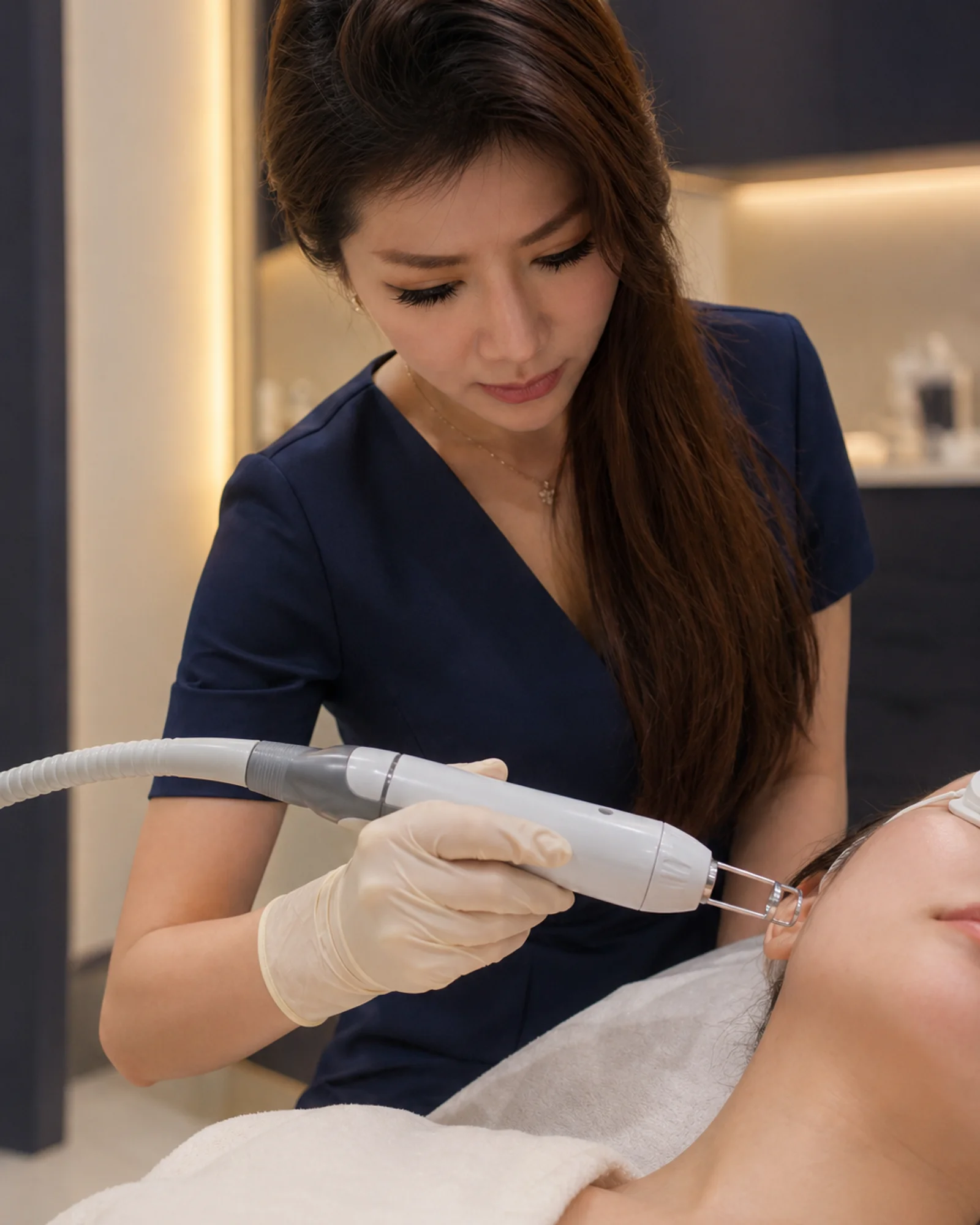

Sun spots and freckles
Surface pigment that topical regimes can't reach. Pico fragments melanin in short pulses, and the body clears it over four to six weeks. SPF habits affect how long the response holds.
2 to 4 sessions · 4 weeks apart
Pigment treatments that backfired and made your melasma worse? Pico Discovery is a pigment-precision laser Dr Samantha maps to your depth and tone first, because managing the darkening risk starts with reading your pigment before firing a single shot.
First time
Single-session laser starter; full-face mapping included
Pico Glow
Pico Resurfacing
Pico Complete
Pico Back Half
Pico Back Full
Pico Eye / Pico Neck
Pico Underarm
Pico Whitening Intimate Area
How Discovery Pico works, why melasma needs a slower hand, and what it can address.
Pico laser in Singapore fires energy in pulses one trillionth of a second long. Pigment shatters into fragments the body clears, while surrounding skin reads the energy as a vibration rather than heat. That difference matters most on Asian skin, where older nanosecond lasers often drove post-inflammatory darkening on the very pigment they tried to clear.
As a melasma treatment and a laser for pigmentation, Pico is mapped to your pigment type first, so the energy matches melasma, sun spots, or post-acne marks instead of treating every patch the same way.
Three changes happen at once during a session at Nexus:
Early brightness shows in two weeks, but real change shows in same-light photographs over three to six sessions. Outcomes vary by depth, skin tone, sun exposure, and aftercare.
Discovery Pico is the picosecond platform Dr Samantha uses at Nexus. It is FDA-cleared, has three wavelengths, and runs short enough pulses to lift pigment without scorching surrounding tissue.
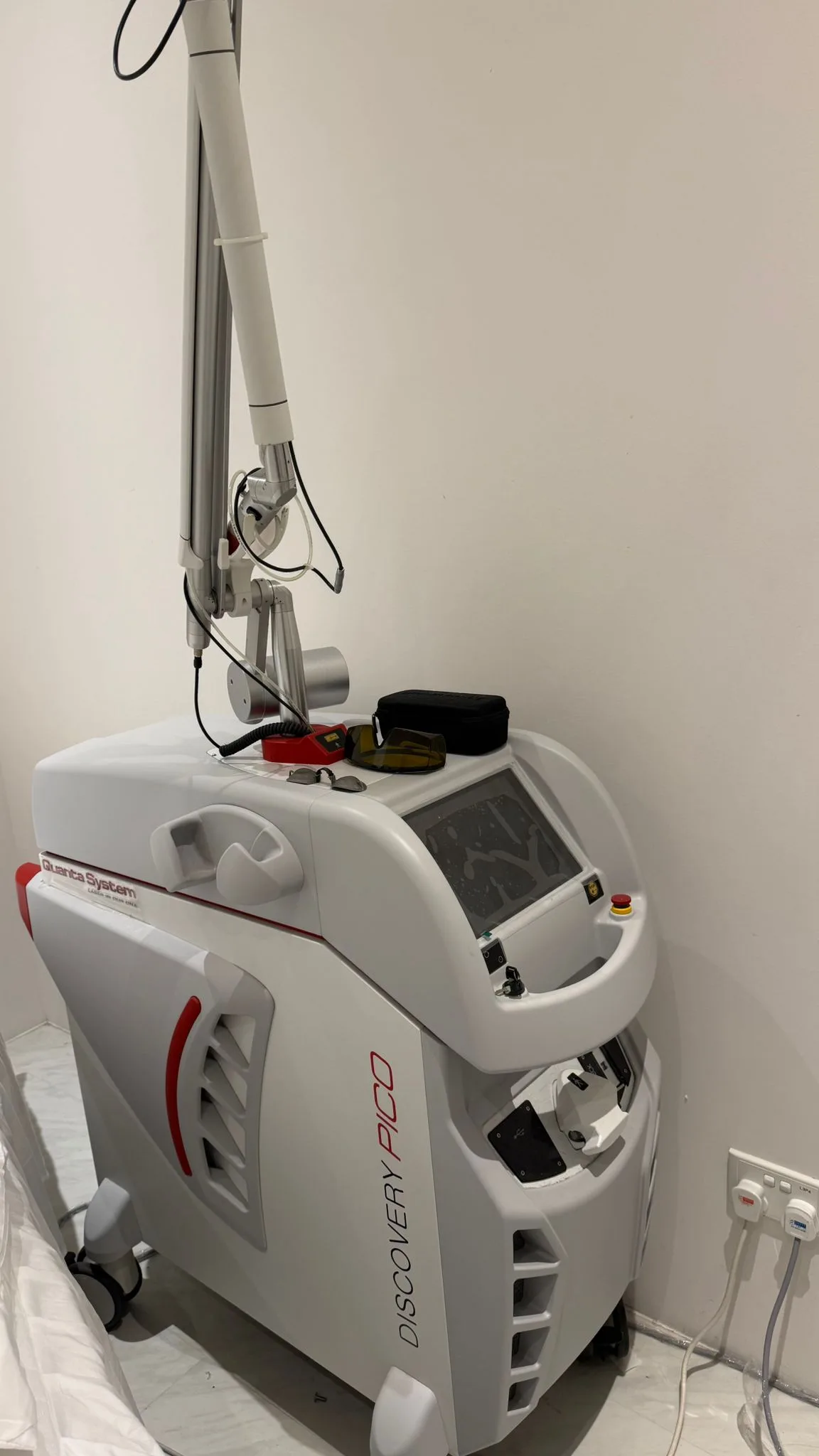
The three wavelengths matter because pigment sits at different depths. Surface freckles respond to 532 nm. Dermal melasma sits deeper and needs 1064 nm. The 694 nm wavelength reaches a mid-brown range that 532 nm misses on Asian skin. The spot size range lets Dr Samantha treat fine pigment around the eye area at 1 mm and broader cheek areas at 8 mm in the same session.
Melasma is the patient question Dr Samantha hears most often. The honest answer: Pico can help stable melasma, but Pico on active melasma can worsen pigmentation. Most “got darker after Pico” cases describe active melasma lasered too early or at fluence too high for the skin tone.
First appointment starts with a Wood's lamp assessment before treatment is considered. Flaring melasma settles with Rejuran S or Profhilo first; then Pico Toning at low fluence once stable. Stable melasma may improve over four to eight sessions, but response varies and relapse is common without daily sun protection.
Pico response depends on whether pigment depth, skin tone, and inflammation risk are assessed before energy is delivered. Two clinics running the same picosecond device can produce different responses depending on how the protocol is set up.
Dr Samantha describes Pico Glow simply: "just a very quick kind of toning laser," the lightest laser treatment for pigmentation on the Nexus menu, built for upkeep between fuller Pico sessions rather than a first-line fix. Her broader filter for any pigment concern stays consistent: when a faster, more visible result is available, she leans toward it over the slower alternative.
Three steps Dr Samantha walks through at the first appointment:
This is why the first appointment at Nexus is a 20-minute consultation, not an automatic treatment visit. Dr Samantha will tell you if Pico is right for your skin, or if the right next step is a different protocol entirely.
Pico is a strong tool for the right pigment, but it is not a fit for every concern. An honest filter:
If we tell you Pico is not the right next step, we will tell you what is.
A standard session runs 30 to 45 minutes including the consultation refresh, prep, treatment, and immediate aftercare.
Cleanse and pre-treatment photo
Skin is degreased; a photo is taken under standardised lighting for tracking.
Numbing cream (optional)
Applied if sensitivity is a concern. Often skipped when sensitivity is low.
Treatment
The handpiece passes over the area in measured sweeps. Some patients describe it as a series of warm rubber-band snaps.
Cooling mask and sunscreen
Plus post-treatment guidance for the recovery window.
Post-treatment photo
Photo under the same lighting; next session booking if part of a course.
Total chair time runs about 30 minutes for the face. Tattoo and full-neck treatments run longer.
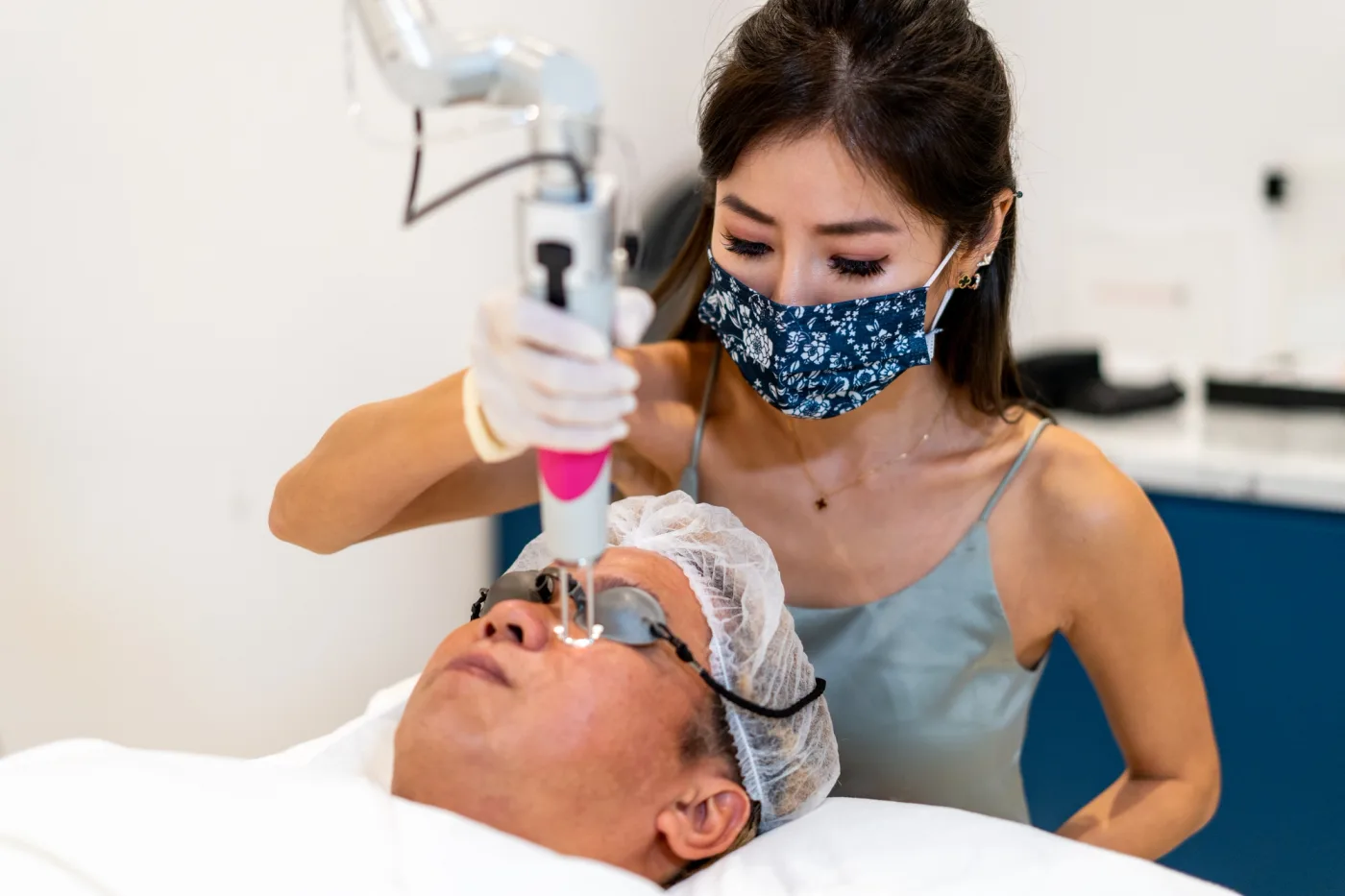
Pico Toning uses a different handpiece pass pattern at lower fluence. It is usually less intense than standard Pico, which is the answer to the common Pico Toning question about discomfort.
Five concerns drive most queries. Realistic per-condition expectation map below. Individual response varies by pigment depth, skin tone, sun exposure history, and how closely the post-treatment protocol is followed.
Most patients booking a laser pigmentation treatment consultation already suspect their diagnosis is uncertain. Sun spots, post-inflammatory marks, and other surface pigment can look almost identical to the eye, but they respond very differently to energy. That is why every pigmentation laser treatment at Nexus starts with the Wood's lamp read described above, before any setting is chosen.
| Concern | Typical sessions | Interval | Duration of response |
|---|---|---|---|
| Sun spots and freckles | 2 to 4 | 4 weeks apart | 12 to 24 months with sun protection |
| Stable melasma | 4 to 8 | 4 to 6 weeks apart | 6 to 12 months, maintenance every 3 months |
| Post-inflammatory hyperpigmentation | 3 to 5 | 4 weeks apart | 12 months with strict sun protection |
| Acne scars | 5 to 8 (combined) | 4 to 6 weeks apart | Years, with no new active acne |
| Skin tone | 4 to 6 | 4 weeks apart | Maintenance every 3 to 4 months |
| Tattoo removal | 6 to 12 | 8 weeks apart | Long-lasting on cleared ink |
Individual response varies. Sun protection is the single biggest factor in how long any pigmentation response holds.
Pico side effects can be mild on appropriate fluence settings. Redness after Pico laser is the most common reaction, often fading within 30 to 60 minutes. The honest split:
When to call us: persistent darker patches more than 4 weeks post-session, blistering or crusting beyond day 7, any signs of infection. Dr Samantha sees Pico complications within 24 hours.
Asian skin warrants tighter fluence calibration. The same energy that produces a clean response on European skin can produce post-inflammatory darkening on Singaporean skin. Nexus calibrates fluence to skin tone using a Fitzpatrick assessment at consultation.
Aftercare for pico laser patients influences whether pigmentation settles or rebounds. The right moisturiser after Pico Laser keeps the barrier intact. Cool, hydrate, protect. The first 48 hours matter for the redness response; weeks one and two matter for daily sun protection and consistent care.
Cleanse and moisturize gently
Non-foaming cleanser at night, warm water, no scrubbing. A gentle moisturizer after Pico laser keeps the barrier intact and helps the redness response settle. Mild itching after pico laser in the first 24 hours is common. Skip retinol, AHAs, BHAs, vitamin C, and niacinamide for 72 hours. They can return on day 3 if your skin tolerates them.
SPF 50+ and hydration daily
Reapply every two hours outdoors. A gentle moisturiser plus tinted mineral sunscreen is usually the safer post-Pico combination on Asian skin. Hyaluronic acid serums layer comfortably under the moisturiser.
Keep the routine going
Pico-treated skin is still resealing the barrier. Daily care and aftercare matter more than any single product. If face itchy after pico laser persists past 48 hours, gets worse, or shows itchy bumps, message Dr Samantha.
Patient-specific instructions are covered at your post-session review.
The benefits of pico laser patients ask about come down to one trade-off: shatter pigment without overheating skin. Six pico laser benefits stand out clinically when the protocol is right for your skin tone.

Combined with proper aftercare, these pico laser benefits compound across a course of three to six sessions.
Stable melasma may improve gradually across a course of 4 to 8 sessions, with maintenance every 3 months. Response varies from person to person, and relapse is common without daily sun protection. Active melasma needs to be settled with Rejuran S or Profhilo first. Pico on active melasma can worsen pigmentation. Nexus protocols start with a Wood's lamp assessment.
Stable melasma usually needs 4 to 8 sessions at 4 to 6 week intervals, plus maintenance every 3 months. Active melasma needs a different starting protocol.
Two common causes. Fluence was set too high for your skin tone, or sun exposure occurred during the recovery window. Strict sunscreen and shade for 4 weeks post-session is non-negotiable on Asian skin.
Pico Toning is a technique on the same picosecond laser, run at lower fluence with multiple passes. It suits sensitive skin and active melasma. Standard Pico runs at higher fluence for surface pigment and tattoo removal. Same machine, different protocol.
Yes, and this is more common than clinics admit. Bring before/during/after photos of your previous course to consultation. Dr Samantha will assess whether the pigmentation rebounded because of fluence-on-Asian-skin issues, sun exposure during recovery, or active melasma being treated as stable melasma. The fix is usually a different protocol (Rejuran S first, lower-fluence Pico Toning, strict sun protocol), not a stronger laser.
For pigmentation, sun spots, and stable melasma on Asian skin, Pico is a non-invasive option when the doctor reads pigment depth first. It is not worth it on active melasma or as treatment without consultation.
Surface pigmentation (sun spots, freckles), stable melasma, post-inflammatory hyperpigmentation, tattoo removal, and skin tone refinement. Less ideal for vascular concerns or deep dermal scars without combination therapy.
For rolling and boxcar acne scars, yes, often in combination with RF microneedling. For deeper ice-pick scars, Dr Samantha assesses whether Nexus's available scar protocols are enough or whether referral is more appropriate.
The first session at Nexus is SGD 99. After that, full-face sessions start at SGD 300 and smaller areas such as the eye or neck from SGD 260. Price depends on the area treated, the pulse mode, and whether you commit to a course. Course pricing brings the per-session cost down.
No. Aesthetic pigmentation treatment is paid out of pocket. Medisave covers medical-necessity dermatology in narrow cases (severe acne with scarring, certain skin cancers), but not aesthetic Pico. We will tell you at consultation if any part of your concern crosses into a medical category.
Every session begins with a Wood's lamp assessment that maps where the pigment sits and how deep it runs. Dr Samantha picks the wavelength to that depth and adjusts fluence to your skin tone, for each area treated. The mapping step is included in the session prices above.
Discovery Pico (used at Nexus) and PicoSure are both picosecond systems but they differ in wavelength range and pulse profile. PicoSure runs primarily at 755 nm, which suits surface freckles on lighter skin tones well. Discovery Pico runs three wavelengths (532 nm, 694 nm, 1064 nm), which gives more flexibility on the deeper dermal pigment that Singaporean Asian skin tends to carry, especially for melasma and post-inflammatory hyperpigmentation. The protocol matters more than the brand: deeper pigment on Asian skin may need adjunctive wavelengths beyond 755 nm. At consultation Dr Samantha will tell you which system fits your pigment depth, not the other way around.
Cost, time commitment, and the strict sun-protection requirement. On the rare side, post-inflammatory hyperpigmentation if fluence is mis-set. Nexus screens for skin tone and pigment depth at consultation to keep this rare.
Patients with active inflammatory acne. Active flaring melasma. Pregnancy or breastfeeding. Photosensitising medication. Vascular dark circles. We will say so at consultation and recommend the alternative protocol.
Temporary slight darkening of treated pigment for 5 to 10 days is expected (the frosting effect, before flaking off). Long-term darkening is the rare side effect described above and should be reported within 4 weeks.
Usually less than standard Pico. Some describe Pico Toning as a series of warm taps. Pain tolerance varies, and we offer numbing cream if sensitivity is a concern.
Twenty minutes with Dr Samantha to read your skin, map your pigment, and tell you whether Pico laser singapore is right for your concern. Or whether something else is.
111 Somerset Road, #03-19, TripleOne Somerset, Singapore 238164
Mon to Fri 11am to 8pm · Sat 11am to 3pm · Sun by appointment


